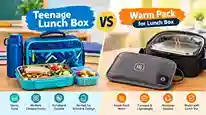
The choice between a teenage lunch box vs warm pack for lunch box will depend on your routine, the food in your box and where you take your lunch, whether it’s to school, college, work or an outdoor activity. Either can be beneficial to make lunch more convenient, but they have different functions. A warm pack for a lunch box to keep the food hot if used properly, and a teenager lunch box that can hold and carry food.
A convenient lunch idea for teens with packed schedules can make lunchtime a more convenient and fun experience. Knowing the differences can help you make a better choice between the two, whether you’re on the lookout for a small container to store sandwiches and snacks or an accessory for lunch that can keep food hot for longer. Here, we will talk about the features, benefits, drawbacks and best uses of both to help you pick the one that suits you best.
What Is a Teenage Lunch Box?
A teenage lunch box is a lunch bag or lunch carrying system for school going, college-going, or out-of-school going teens and youths. These lunch boxes usually have contemporary designs and useful compartments, and are also portable which fits in the backpacks easily.
Most of the lunch bags for teens are plastic, stainless steel or insulated fabric. Some models feature separate compartments for snacks, fruit, sandwiches and other foods. Some lunch boxes may include a carrying handle, a leak-proof lid, or insulation.
Key Features of a Teenage Lunch Box
- Multiple compartments: Keep different foods separated.
- Portable design: Easy to carry to school or college.
- Durable materials: Available in plastic, stainless steel, and fabric.
- Modern styles: Offered in various colors, patterns, and sizes.
- Easy cleaning: Many models have removable containers or dishwasher-safe components.
- Food storage: Helps protect meals from dirt and spills when properly closed.
Benefits of a Teenage Lunch Box
A teenage lunch box offers a convenient way to organize daily meals. Students can pack a balanced lunch, bring snacks, and avoid relying entirely on food purchased outside the home.
Its compartments can be particularly helpful for keeping fruit away from sandwiches or storing small snacks separately. A well-designed lunch box can also fit into a school bag without taking up too much space.
Another advantage is variety. Students can choose from colorful lunch bags, minimalist containers, stainless-steel boxes, and insulated designs according to their preferences and daily needs.
Drawbacks of a Teenage Lunch Box
Not every lunch box keeps food warm. A standard plastic or stainless-steel container may protect food from spills but provide little insulation against temperature changes.
Some models also lack enough capacity for larger meals, while containers with several compartments can be difficult to clean if food becomes trapped in corners or seals.
If you regularly carry hot meals, you may need an insulated lunch box or an additional warming accessory.
What Is a Warm Pack for a Lunch Box?
A warm pack for a lunch box is an accessory intended to help food stay warm during transportation. The term can describe different products, including reusable heat-retaining packs, insulated wraps, or specially designed warming accessories.
It is important to understand that not all warm packs work the same way. Some retain heat already present in a meal, while others are designed to provide warmth through a specific heating method. A conventional reusable heat pack may not be suitable for direct food contact or for heating food to a safe temperature.
Before purchasing one, check the manufacturer’s instructions to determine whether it is designed for lunch boxes, whether it can contact food, and how it should be used.
Key Features of a Warm Pack for a Lunch Box
- Heat retention: Certain designs help slow heat loss from a packed meal.
- Portable construction: Many packs are compact and easy to carry.
- Reusable options: Some products can be used repeatedly according to their instructions.
- Insulated materials: Certain models use layers that reduce heat transfer.
- Convenient storage: Small packs may fit inside a suitable lunch bag.
- Different designs: Products vary in size, material, and heating method.
Benefits of a Warm Pack for a Lunch Box
A suitable warm pack can be helpful when you want to maintain the warmth of a meal during a commute, school day, or outdoor activity. It may be especially useful when a microwave is unavailable.
Depending on the product, a warm pack can work alongside an insulated lunch bag or food container. This combination may help slow heat loss more effectively than using an ordinary container alone.
Warm packs can also be convenient for people who prefer to carry homemade meals such as rice, pasta, or other hot dishes. However, the results depend on the product design, starting food temperature, insulation, and time spent in transit.

Drawbacks of a Warm Pack for a Lunch Box
A warm pack is not necessarily a complete food-storage solution. It may not have compartments, a secure food container, or enough protection against leaks.
Some packs require preparation before use, and certain types may become too hot to handle comfortably. You should follow the manufacturer’s safety instructions and avoid placing a non-food-safe heat pack directly against food.
Most importantly, warmth alone does not guarantee food safety. Perishable food must be kept at a safe temperature. A pack that merely feels warm may not keep a meal hot enough for safe storage.
Teenage Lunch Box vs Warm Pack for Lunch Box: Main Differences
Understanding the main differences makes it easier to choose the right product for your needs.
| Feature | Teenage Lunch Box | Warm Pack for Lunch Box |
|---|---|---|
| Primary purpose | Store and carry meals | Help retain or provide warmth, depending on design |
| Food storage | Yes | Usually requires a separate container |
| Compartments | Available in many models | Generally not included |
| Portability | Designed for carrying meals | Usually compact and lightweight |
| Heat retention | Depends on insulation | Depends on the pack’s design and use |
| Cleaning | Containers and bags may require cleaning | Cleaning requirements vary by material |
| Best use | School lunches, snacks, and everyday meals | Supporting temperature retention during transport |
| Versatility | Can carry hot or cold foods, depending on the model | Mainly useful when warmth is needed |
| Additional equipment | Usually none for basic storage | May require a compatible lunch box or insulated bag |
Which Option Is Better for School and College?
For most students, a teenage lunch box is the more practical starting point because it provides the essential function of storing and transporting food.
A lunch box with compartments can hold sandwiches, fruit, snacks, and other items in an organized way. If you choose an insulated model, it may also help maintain the temperature of food for a limited period.
A warm pack can be useful if you specifically need to support heat retention. However, it cannot replace a proper food container.
Best choice: Choose a teenage lunch box for everyday meal storage. Consider adding a compatible warming accessory if you regularly carry hot meals and the product is designed for that purpose.
Which Option Is Better for Keeping Food Warm?
The answer depends on the specific products being compared.
A standard teenage lunch box may offer limited temperature protection, while an insulated lunch box can slow heat loss. A suitable warm pack may provide additional assistance, but its performance varies according to its design.
For hot meals, consider these factors:
- The quality of the lunch box’s insulation.
- Whether the food container has a secure, heat-resistant lid.
- How long the meal will be stored before eating.
- Whether the warming accessory is designed for food-related use.
- Whether the system can maintain a safe food temperature.
For longer school days, an insulated food jar or a purpose-built electric food warmer may be more appropriate than relying on a basic container and an ordinary warm pack.
Value for Money
A teenage lunch box can offer good long-term value because it is reusable and provides everyday food storage. Basic models may be sufficient for sandwiches and snacks, while insulated or stainless-steel versions can offer additional benefits.
A warm pack may be a useful supplementary purchase if you already own a lunch box. However, its value depends on whether it provides meaningful temperature retention for your particular routine.
When comparing prices, consider durability, cleaning requirements, material quality, and whether you need to buy additional accessories.
Value recommendation: If you do not already own a suitable container, purchase a lunch box first. If you already have a good lunch box but struggle to keep meals warm, compare purpose-built warming accessories and insulated containers before spending extra money.

Safety and Maintenance Tips
Food safety should be a priority when packing lunches for teenagers.
- Use appropriate insulation: Choose a lunch box designed for the type of food you are carrying.
- Follow temperature guidance: Keep hot foods hot and cold foods cold rather than leaving perishable meals at room temperature for extended periods.
- Check the warm pack instructions: Do not assume that every heat pack is food-safe or suitable for direct contact.
- Clean regularly: Wash food containers and lids according to the manufacturer’s directions.
- Inspect for damage: Replace cracked containers, damaged seals, or leaking packs.
- Avoid overheating: Never heat a pack in a microwave or another appliance unless its instructions explicitly permit it.
- Pack securely: Keep liquids and sauces in suitable leak-resistant containers.
For perishable food, use an insulated container designed to maintain the appropriate temperature. In general, hot food should be kept at or above 140°F (60°C), while cold perishable food should be kept at or below 40°F (4°C). If you cannot maintain safe hot or cold storage, use a suitable food-safety solution rather than relying on the pack’s warmth alone.
Pros and Cons
Teenage Lunch Box
Pros
- Convenient for daily school and college meals.
- Available in various sizes and designs.
- Can include multiple compartments.
- Reusable and easy to organize.
- Suitable for carrying snacks and complete meals.
Cons
- Standard models may not keep food warm for long.
- Some containers can leak if poorly designed.
- Insulated models may cost more than basic options.
- Compartments and seals need regular cleaning.
Warm Pack for Lunch Box
Pros
- Can support heat retention when appropriately designed.
- Often compact and portable.
- Some models are reusable.
- Can complement an insulated food container.
Cons
- Usually cannot store food by itself.
- Performance varies considerably by product.
- May require preparation or special handling.
- Does not automatically guarantee safe food temperatures.
Who Should Buy a Teenage Lunch Box?
A teenage lunch box is a good option for:
- School and college students who bring meals from home.
- Teenagers who prefer homemade food and snacks.
- Students who need to organize different foods separately.
- People looking for a reusable alternative to disposable food packaging.
- Anyone who needs a convenient container for everyday meals.
Look for a model with enough capacity, secure closures, easy-to-clean materials, and an appropriate design for your backpack.
Who Should Buy a Warm Pack for a Lunch Box? Teenage Lunch Box vs Warm Pack for Lunch Box
A warm pack may be worth considering for:
- Students who regularly carry meals that are intended to be eaten hot.
- People who already own a suitable lunch container.
- Commuters who need additional heat retention during transportation.
- Outdoor users who have limited access to food-heating facilities.
- Anyone whose chosen lunch system is compatible with a warming accessory.
Always check the product’s actual function. A heat-retaining pack, a reusable hand warmer, and an electric food heater are different products and should not be treated as interchangeable.
Final Verdict: Teenage Lunch Box vs Warm Pack for Lunch Box
When comparing teenage lunch box vs warm pack for lunch box, the better choice depends on what you need most. A teenage lunch box is the more versatile everyday option because it stores, organizes, and transports food. A warm pack is better viewed as a supplementary accessory for products and situations where additional heat retention is useful.
For most students, the best approach is to start with a durable, easy-to-clean lunch box. If you frequently carry hot meals, consider an insulated container or a compatible warming solution that can maintain safe food temperatures.
Ultimately, prioritize convenience, durability, food safety, and suitability for your daily routine rather than choosing a product based on appearance alone.
Frequently Asked Questions (FAQs)
1. Is a teenage lunch box better than a warm pack for a lunch box?
A teenage lunch box is generally better for everyday use because it stores and transports food. A warm pack serves a more specialized purpose and usually needs to be used with a separate container.
2. Can a warm pack keep lunch warm for several hours?
It depends on the product, insulation, starting temperature, and environmental conditions. Check the manufacturer’s performance information, and do not assume that a warm pack will maintain a food-safe temperature for an entire school day.
3. What type of lunch box is best for teenagers?
A durable lunch box with sufficient capacity, secure closures, easy-to-clean materials, and suitable insulation is a practical choice. The best model depends on the foods being packed and the student’s schedule.
4. Can I use a warm pack with any lunch box?
Not necessarily. Check compatibility and the manufacturer’s instructions. Some products are designed for use with particular insulated bags or containers, while others are not suitable for food-related applications.
5. Are reusable warm packs safe for lunch boxes?
Some are suitable when used according to their instructions, but others are designed for different purposes. Verify that the product is intended for lunch-related use, and never place a pack directly against food unless the manufacturer confirms that it is food-safe.
6. How can I keep school lunch warm without a microwave?
Use a purpose-built insulated food jar or container designed for hot meals, and follow its preheating and packing instructions. Keep food at a safe temperature until it is eaten rather than relying on residual warmth.
7. Is an insulated lunch box worth buying?
An insulated lunch box can be worthwhile if you regularly carry meals that need additional temperature protection. Its effectiveness depends on insulation quality, the food container, and how long the meal is stored.
8. Which is more affordable: a teenage lunch box or a warm pack?
Prices vary by size, materials, and design. A basic lunch box may be the most useful first purchase because it provides essential food storage, while a warm pack is an additional expense for a more specific need.