
Portable Food Heating Device vs Lunchbox for Hot Food For more convenience · Keeping Meals warm when you are away from home, especially for students, office workers, travelers, drivers and people working outside for long hours. A transportable food heating appliance is only one of ways however common purpose for a hot lunchbox. While both are capable of warming up your meal, they operate in completely different ways.
A portable food warming unit heats the food via electric power or other heating system; on the other hand, a heated lunchbox is typically an insulated lunch box used to keep hot food at temperature after it is cooked. By recognizing the differences between them, you can find the perfect solution for your everyday palate.
In this guide, we will compare a portable food heating device vs lunchbox for hot food in terms of performance, portability, and convenience while considering how different power requirements help you determine which option works best as well as things like cleaning capacity safety and cost associated with both designs along with their common use cases
What Is a Portable Food Heating Device?
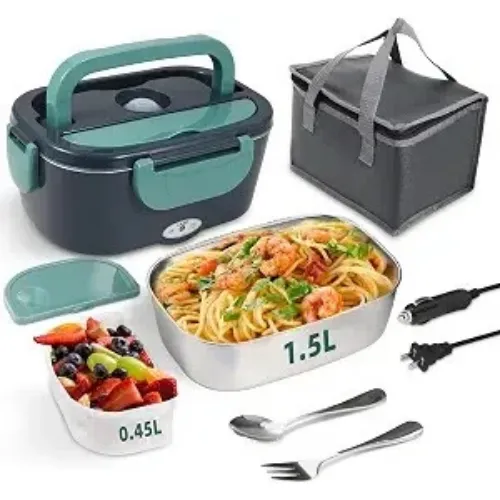
A portable food heating device is a small appliance that heats up some of your presh heated foods in places where are you away from the kitchen. A number of models are nowadays designed to resemble lunch box but they also have an internal heating element.
Certain devices connect to an electrical socket, while some may use vehicle power or a rechargeable battery. You can warm rice, pasta, vegetables, soup, meat or any other prepared food (depending on the model).
The biggest advantage is that you do need to eat your food right after making it. You can also take it to go and reheat it when you feel like eating.
Portability — If you have a job where you are required to sit mostly indoors like an office profession, or drive long distances for work purposes, travel often and donot always have access to a microwave handy when eating out.
What Is a Lunchbox for Hot Food?
A lunchbox for hot food is usually designed to retain the temperature of food that has already been heated. Insulated lunchboxes and food containers use materials that slow down heat loss.
For example, you might prepare a hot meal at home, place it inside an insulated container, close the lid, and carry it to work or school. The container does not normally generate heat. Instead, its job is to keep the existing heat inside for as long as possible.
Some insulated lunch containers include multiple compartments, leak-resistant lids, and stainless-steel interiors. These features can make them practical for carrying complete meals.
Portable Food Heating Device vs Lunchbox for Hot Food
The main difference between these two products is simple: one actively heats food, while the other primarily retains heat.
When you want to reheat food later in the day, a portable cooker works better. In contrast, a lunchbox intended for hot food is better suited when you want to pack an already-hot meal and keep it warm while being transported.
Lets dive deeper into looking at both options.
1. Heating Performance
Heating performance is one of the most important differences.
A food warming device is any device used to warm up the food, it will often include a heating element. When properly plugged into a power source, it slowly heats the food in the container.
The time it takes for the heat to circulate will depend on how much food there is, the temperature at which you are starting, how your device is designed and what power output is available. Certain models are intended for gentle warming rather than quick cooking.
A regular hot-food lunchbox doesn’t actually heat food. It use insolation to trap the heat. If you put super-hot food in it, it keeps warm for hours —but that will eventually start dropping.
So if keeping food warm later is your main concern, an electric-heating unit provides a different level of functionality.
2. Portability
Both products are portable, but portability can mean different things.
An insulated lunchbox typically is lightweight, with no cables, chargers or electrical connectors anywhere. You can bring it basically anywhere.
The portable food warming device may be slightly more complex as a power adapter, charging cable, battery or vehicle connection may be required depending upon the model you choose.
For instance, in cases where you are traveling far away from civilization with no electricity, an insulated lunchbox may be a more convenient option.
A portable food warming device can offer added convenience when used outdoors or other times when you have regular access to an electrical outlet, USB-compatible power source or a proper vehicle connection but it is not necessary in all situations.
3. Convenience for Office Workers
Office workers often have different needs depending on their workplace.
You may not need an electric heating appliance if you have a microwave in your office. You can choose normal lunch box because you will just heat the meal when you are ready to eat.
No microwave in every workplace, however!
In many offices where employees do not share modular kitchen, a portable food heating device may prove quite useful. You might cook your food at home, bring it to the work place and then reheat it on your desk if the workplace allows such things.
If you prefer to eat your food shortly after arriving at work, an insulated lunchbox is less complex.
4. Use for Drivers and Travelers
Drivers can benefit from portable food heating solutions because they may spend several hours away from kitchens.
For instance, long-haul truck drivers may have meals with them. A proper food warmer can provide you a great convenience to be able to warm up some food when having time for taking break from driving related to her vehicle and the device.
Plus, an insulated lunchbox is handy too as it relies on no electricity! So it can keep food warm, but this is only possible if the thermos container has a good heat retention property.
When it comes to road trips, camping or traveling, the answer depends on how easy power access is and how long you need to keep food cold.
5. Power Requirements
Power is another major difference.
An electrical lunchbox for hot food does not need electricity. You warm your meal before you leave and then put it into the insulated tank.
Some form of energy is required for food heating devices that are portable. And this may be depending on the product:
Wall electricity
Vehicle power
USB power
Rechargeable battery
A dedicated power system
DO always check the manufacturers instructions and electrical specifications of any heating device prior to use.
When it comes to taking a couple of beers with you on the go, if your travels often take you to locations without electricity, insulated containers may be more practical.

6. Temperature Retention
An insulated lunchbox is specifically designed to slow down heat loss.
Insulation quality, lid seal, container material, quantity of food and initial temperature all affect heat retention.
A heat cap is a portable device that addresses the issue differently. So, instead of insulate and keep in heat that way, it can be the heating food.
This means that the two products may be strong at different aspects of the process. An insulated lunchbox might be a proper complement to keep warm without power and an electric food warmer helps achieve long lasting heating while connected to a compatible AC supply.
7. Food Types
Both options can carry many types of food, but the suitability depends on the design.
Giving You a Hot Food Lunchbox Can Be Used For:
Rice
Pasta
Vegetables
Sandwiches
Chicken
Meat
Noodles
Soup
Stews
A mobile food warming appliance may also hold similar meals, so long as the unit instructions permit.
Some appliances are more appropriate for solid foods while there are other that includes food with more moisture. Always adhere to the timeline provided by the manufacturer for any liquids and foods that may spill.
8. Capacity
Capacity is another important consideration.
They come in all sizes from small single service containers to large multiple compartment carriers.
Portable heaters come in various sizes. But the internal heating design can take up to a lesser volume than that of an equivalent external size of justa food container.
Just remember before purchasing how much you typically eat at lunch time.
Especially if you have to carry a whole big meal, look at the internal spec rather than just the external dimensions.
9. Cleaning and Maintenance
Cleaning is important for both types of containers.
If the traditional lunchbox comes with a removable stainless steel or plastic food container, this makes it relatively easy to clean.
Since it contains electrical components, a portable heating device should be taken care of all the more so. Do not ever take for granted that a whole appliance can be placed in water.
Opt for those models that have removable food trays and are easy to clean as well. Carefully follow the cleaning instructions of the manufacturer.
Cleaning frequently can help minimize the accumulation of smells and food residue.
10. Safety Considerations
Safety should always be considered when using a heating appliance.
With an electric food warmer, only use manufacturer provided power source and accessories as outlined. Avoid using any damaged cables and connectors.
The heating surface and food might be hot, so take care with the pot.
Since a classic insulated lunchbox does not actually heat food, there are less electrical things to be concerned about.
All food should be stored and handled properly, no matter which option you decide to follow. Now, this should not be allowed: Leaving perishable foods at unrefrigerated temperatures for a long time.
11. Cost Comparison
The price of a traditional lunchbox can vary considerably depending on the materials, insulation, brand, capacity, and features.
A simple insulated lunchbox is cheaper than heated portable electric lunch.
That makes one more expensive since it has electrical components and heating technology.
But if you find yourself needing to heat meals while outside of home on a regular basis, it could make sense to shell out the extra for the higher purchase price.
The one that suits best will be subject to the frequency of use of the product and the functionalities you need.
12. Ease of Use
A traditional lunchbox is extremely straightforward.
Just heat, pack inside the container, lid it and keep moving.
A portable heater has a couple of added steps. You have to put the food in place, plug in the right power source and give it enough time to really heat up.
Well, for some people, these extra steps are worth it for the extra flexibility they provide.
Comparison Table of Portable Food Heating Device and Hot Food Lunchbox
Product Comparison TableFeaturesPortable Food WarmerLunchbox for Warm Meal
Active heating Yes, depending on model No
Electricity Usually required Not required
Heat retention Usually included Main function
Portability High Very high
Microwave required No Usually no
Heating later Yes No
Cleaning Requires extra care Usually simple
Price Often higher Often lower
Most suitable for Offices, drivers, travel School, work and travel
Power source Required for heating None
Which One Should You Choose?
There is no single option that works for everyone.
A portable food heating device may make sense if you:
- Need to heat meals away from home
- Do not have access to a microwave
- Spend long hours at work
- Drive for extended periods
- Travel frequently
- Prefer freshly warmed food
- Have access to a suitable power source
A lunchbox for hot food may be more suitable if you:
- Prepare meals immediately before leaving home
- Want a simple container
- Do not want to depend on electricity
- Prefer lightweight equipment
- Need a lunchbox for school or work
- Want an affordable solution
- Have no reliable access to power
Can You Use Both?
Yes. In certain situations, this enables you to have the additional flexibility of a combination of both products.
Thus, an insulated lunchbox may be helpful whenever you wish to keep the warmth of your food from cooking the meal traveling. You can then use a portable food heating device whenever you require some more warming.
But you may not always need both of them. If your schedule allows you to have a microwave or kitchen to prepare, then it is unnecessary in getting a heating equipment.
What Should You Look for in a Portable Food Heating Device?
If you decide that an electric food warmer is right for you, consider the following features:
Heating Method
Check how the device receives power and how the heating system works. Make sure it is compatible with your intended environment.
Capacity
Choose a size that matches your typical meal. A larger container may be useful for bigger meals, while a compact design may be easier to carry.
Removable Food Container 1 Best portable food heating device
A removable inner container can make cleaning easier.
Leak-Resistant Design
If you carry soups, sauces, or other liquids, look for a container designed to reduce the risk of leaks.
Portability
Consider the size, weight, carrying handle, and storage requirements.
Safety Features
Look for products with appropriate electrical protection and clear operating instructions.
What Should You Look for in a Lunchbox for Hot Food?
For a traditional insulated lunchbox, consider:
Insulation
Good insulation is essential for retaining heat.
Lid Seal
A secure lid helps reduce heat loss and can also help prevent spills.
Material
Stainless steel, food-grade plastic, and other commonly used materials each have different advantages.
Compartments
Multiple compartments can help separate different foods.
Size
Choose a capacity that fits your normal meal without becoming unnecessarily bulky.
Easy Cleaning
A simple design with removable components can make daily cleaning easier.
Final Thoughts
The choice between a portable food heating device vs lunchbox for hot food largely relies on how you want to keep a meal hot.
An insulated lunchbox for hot food is designed to keep heat already there. It’s easy, mobile and does not use electricity.
An additional feature provided by a portable food heating device is that it can now passively warm up to food when attached to an appropriate power source. This is valuable for those who are away from a kitchen or microwave for long periods.
Or for someone who wants things as simple as can be, maybe even an insulated lunchbox is sufficient. A person wanting the option to warm food later can get a little more versatility with portable food heating equipment.
Consider your routine, the type of food you take with you, how generous the portion sizes are going to be, whether or not such lunch-contained carrying will have electricity exposure with portables availability and how much cleaning you’d ideally like to do (very importantly) and price points in mind before deciding. Through comparing these factors, you can the quality of food storage container that aligns with your daily life.
Frequently Asked Questions
1. What is the main difference between a portable food heating device and a lunchbox for hot food?
A portable food heating device actively warms food using a heating element and a suitable power source. A lunchbox for hot food generally uses insulation to keep food warm after it has already been heated.
2. Can a portable food heating device heat food without a microwave?
Yes. A portable food heating device can warm food without a microwave when it has access to its required power source, such as an electrical outlet, vehicle connection, or compatible battery system.
3. Is a lunchbox for hot food better for traveling?
An insulated lunchbox can be convenient for traveling because it does not require electricity. It can help retain the heat of food that was packed while hot, making it useful for trips where power is unavailable.
4. What foods can be used in a portable food heating device?
Depending on the manufacturer’s instructions, many portable food heating devices can be used for foods such as rice, pasta, vegetables, noodles, meat, soup, and other prepared meals. Always check the specific device’s instructions before heating liquids or other foods.
5. Does a portable food heating device require more cleaning?
It can require more care because it contains electrical components. Many models have removable food containers that make cleaning easier. The electrical portion should be cleaned according to the manufacturer’s instructions and should not be submerged unless specifically designed for it.
6. Which option is more convenient for everyday meals?
It depends on your routine. A lunchbox for hot food is convenient when you prepare and pack your meal hot, while a portable food heating device can be more useful when you need to warm your meal later and have access to a suitable power source.