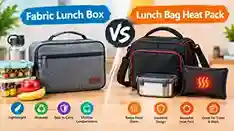
Fabric Lunch Box vs Lunch Bag Heat Pack Whether you’re heading to school, to work, on a long trip or out and about, the right lunch container can make meals easier. There are a couple of items that are helpful for carrying meals, and those items are a fabric lunch box and a lunch bag heat pack. Knowing their features will allow you to choose the best one for you.
A fabric lunch box tends to be lightweight, portable and easy to carry, while a lunch bag heat pack has a combination of a lunch bag and a means of keeping the food warm. Either can be beneficial for individuals who prepare their own food rather than leave for the supermarket to purchase meals each day. We will compare the features, benefits, drawbacks and common uses of the two and be able to make a good decision.
What Is a Fabric Lunch Box?
Fabric lunch box is a type of reusable lunch box that consists of a fabric material like polyester, cotton, nylon or insulated fabric. Some designs have a lining of some type inside that will slow down the transfer of heat and keep it within the food for a short time. Zippers, handles, shoulder straps and separate compartments are also options in some models.
They can be easily carried by students, office workers and travelers for the ease of transport and come in various colors, sizes and designs. There are some models that can fit food containers, snacks, fruit and water bottles.
The main features of a fabric lunch box include:Fabric lunch boxes have the following main features:
Lightweight design: It is easy to move the device around in daily life.
Reusable design: Helps reduce dependence on disposable lunch bags.
Insulated lining: May keep food at temperature for a short period of time.
Several sections: Some have individual snack and utensil compartments.
Easy-to-use: They come in plain, colorful and contemporary patterns.
Portable: Many are soft-sided, allowing for easy portability.
What is a Fabric Lunch Box?
If you are looking for a simple, convenient lunch box, then the fabric lunch box is the right option for you. Depending on the size, it can be stored in a backpack, handbag or work bag, because of its soft construction. The design can also feature a durable handle and a secure zipper for convenient food transportation.
Durability: Provides a reusable, convenient way to take food with you.
The following are some key features: Lightweight fabric, optional insulation, zippered closure, carrying handles, and a range of sizes.
Pros:
Portable to school, work or outdoor activities.
Available in many colors and designs.
Easily stored and reusable.
Good for sandwiches, snacks or food containers.
Available at affordable price point, often with low end manufacturing.
Cons:
Simple fabrics fabric models can offer minimal insulation.
Soft sides may provide some resistance to crushing.
Some materials will absorb on spilled liquids or scents.
Without proper insulation food will not stay warm for very long.
Recommended: If you’re a student, office worker or need to carry a light lunch container, then it is recommended that you use it.
Most suitable for: Daily use, snacks, sandwiches and food containers.

What is a Lunch bag Heat pack?
A lunch bag heat pack is a lunch carrying device that has a heat packing or warming accessory to help keep the food warm during lunch. This can be an insulated lunch bag and a reusable heat pack, a specially-made warming pack, or a container that keeps heat.
The primary benefit is that it is more about keeping food warm and not just transporting it. The performance will vary depending on the amount of time from packing to eating, the type of heat pack, and the starting temperature of the food in the heat pack.
Note: An ordinary heat-retaining pack will not necessarily heat cold food. Only use a product which is meant for food and use it in accordance to the instructions.
Here are the main features of a Lunch Bag Heat Pack:
Thick insulation: A suitable pack and insulated bag can help to keep food warm.
Portable features: Most have portable features, designed to take meals on the go.
Easy to store meals: Appropriate for packed lunches or prepared meals.
Reusables: Certain accessories like heat packs can be used more than once, following the instructions given.
Various sizes: There are choices for single meals and larger food containers.
Temperature management: When used properly, the combination may help to minimize heat loss.
Product Introduction: Lunch Bag Heat Pack
Those who would like a warm meal in the middle of a hectic day may find a heat pack for lunch to be useful. It can be particularly useful for anyone who doesn’t have easy access to a microwave in their office, at work, or on the commute. Use an insulated bag and an appropriate heat pack for some insulation, though not all bags will fit all heat packs.
Portability: Makes it easy to transport food and keeps it warm.
Key Features: Insulated lunch bag, compatible heat-retaining pack, portable construction, and space for food containers.
Pros:
May be able to maintain food at a higher temperature than a regular uninsulated bag.
It’s great for those who like their lunch hot.
Indoor, outdoor and work-appropriate.
Some heat packs can be reused.
Can be used in combination with appropriate packaging for food.
Cons:
May be more expensive than a simple lunch bag fabric.
Increases the number of additional accessories to carry.
Different designs, conditions, and more will affect the ability to retain warmth.
A pack that is designed to keep food warm may not be suitable for warming cold food.
Must be handled and cleaned carefully following the manufacturer’s directions.
Recommended: If you often take meals with you that you wish to eat “hot”, then it may be worthwhile to invest in this type of thermos bottle.
Ideal For: Office lunches, commuting, day trips and when a microwave is not in easy reach.

Fabric Lunch Box vs Lunch Bag Heat Pack: Key Differences
Both options make carrying lunch easier, but the right choice depends on your priorities. One emphasizes simplicity and portability, while the other focuses more on retaining warmth.
| Feature | Fabric Lunch Box | Lunch Bag Heat Pack |
|---|---|---|
| Main purpose | Carrying meals | Carrying meals while helping retain warmth |
| Portability | Usually lightweight | May be slightly heavier with the pack |
| Insulation | Depends on the lining | Depends on the bag and heat pack |
| Warm meals | Limited without insulation | Better suited to warmth retention |
| Maintenance | Clean according to fabric and lining instructions | Clean the bag and maintain the pack separately |
| Storage | Often compact when empty | Requires space for the bag and pack |
| Cost | Often budget-friendly | May cost more as a combination |
| Best use | Everyday packed lunches | Meals that should remain warm |
1. Design and Portability
A fabric lunch box is often the simpler option for everyday use. Its soft-sided construction makes it convenient to place inside a backpack or carry by hand. Many models are designed to hold a lunch container, snacks, and small accessories without taking up too much space.
A lunch bag heat pack may have a similar appearance, but the additional pack can increase its weight and storage requirements. If you carry your lunch over long distances or use public transport, consider the total weight of the bag, food, container, and warming accessory.
Winner: Fabric lunch box for simplicity and lightweight portability.
2. Heat Retention and Food Temperature
Heat retention is one of the most important differences between these products. A basic fabric lunch box may not keep hot food warm for very long, particularly if it has no insulated lining. An insulated fabric lunch box can perform better, but its effectiveness varies.
A lunch bag heat pack may help slow the cooling process when used with a properly insulated bag. However, results depend on the pack’s design, the amount of insulation, and how the food is packed.
Neither option should automatically be treated as a food heater. If you need to heat food from a cold or refrigerated temperature, choose a purpose-built food warmer and follow its operating instructions.
Winner: Lunch bag heat pack when the product is designed for food-safe heat retention and used correctly.
3. Cleaning and Maintenance Fabric Lunch Box vs Lunch Bag Heat Pack
Fabric lunch boxes can be relatively easy to maintain if they have a wipe-clean interior. Some models are machine washable, but others require hand cleaning. Always check the manufacturer’s care instructions before washing the entire bag.
A lunch bag heat pack requires additional attention because the bag and the pack may need different cleaning methods. Some packs must never be submerged in water or exposed to high temperatures. Inspect them regularly for leaks, damage, or other signs that they should no longer be used.
Winner: Fabric lunch box for straightforward maintenance, especially if it has a removable or wipe-clean lining.
4. Durability and Everyday Use
Durability depends on the fabric, stitching, zipper, insulation, and overall construction. A well-made fabric lunch box can handle regular use, but thin materials may wear out with frequent carrying or washing.
A lunch bag heat pack can also be durable, although it has an additional component that needs care. The bag may last for years with proper maintenance, while the pack’s lifespan depends on its material and usage instructions.
For either option, look for reinforced seams, reliable zippers, washable surfaces, and a size that accommodates your usual food containers.
Winner: It depends on the product’s build quality. Compare construction and care requirements rather than choosing by category alone.
5. Price and Overall Value
A basic fabric lunch box is often an economical choice because it provides a simple way to transport meals. You can find different styles to suit your budget, from basic fabric bags to insulated models with extra compartments.
A lunch bag heat pack may cost more if it includes a specialized insulated bag and reusable warming accessory. However, the additional cost may be worthwhile if keeping lunch warm is an important part of your daily routine.
When comparing prices, consider what is included. Check whether the heat pack is sold separately, whether the bag has insulation, and whether the product is suitable for your food containers.
Winner: Fabric lunch box for budget-conscious buyers who primarily need a convenient carrier.
6. Which Option Is Better for School and Work?
For school, a fabric lunch box can be a convenient option because it is lightweight and easy to organize. A model with enough space for a food container, fruit, and a water bottle may be all you need.
For office workers, the best option depends on meal preferences and available facilities. If a refrigerator and microwave are accessible, a regular insulated lunch bag may be sufficient. If you need to retain warmth during a commute or a long journey, a compatible lunch bag heat pack may be more useful.
Remember that insulation alone does not guarantee food safety. Perishable foods need appropriate temperature control, and hot foods should be kept hot using suitable equipment.
Winner: Fabric lunch box for general daily carrying; lunch bag heat pack for people who specifically need help retaining warmth.
7. Food Safety and Practical Tips
Whichever option you select, use it correctly to protect the quality and safety of your meals.
- Choose food containers with secure, leak-resistant lids.
- Follow the instructions provided with your lunch bag and heat pack.
- Use only heat packs intended for the relevant food-related purpose.
- Do not assume a heat pack can safely reheat refrigerated food.
- Keep perishable foods at safe temperatures using an appropriate insulated carrier and suitable hot or cold packs.
- Clean spills promptly and allow the bag to dry fully before storing it.
- Avoid using damaged packs or placing them directly against food unless the manufacturer specifically permits it.
For perishable foods, the USDA’s general guidance is to avoid leaving food at room temperature for more than two hours, or one hour when the temperature is above 90°F (32°C). Use an appropriate food thermometer when temperature verification is necessary.
Buying Guide: How to Choose the Right Lunch Bag
Before purchasing either product, consider these important factors:
1. Size and capacity: Choose a bag that fits your regular meal containers without excessive empty space.
2. Insulation: Look for a well-insulated lining if temperature retention matters to you.
3. Material: Select a fabric that suits your needs and is easy to clean.
4. Closure: A reliable zipper or secure closure helps keep the contents contained.
5. Carrying comfort: Consider handles, shoulder straps, and the total loaded weight.
6. Heat pack compatibility: If buying a warming accessory, verify that it is designed for the intended use and compatible with the bag.
7. Price and warranty: Compare product quality, included accessories, and warranty coverage instead of focusing only on the lowest price.
Final Recommendation: Which One Should You Buy?
The choice between a fabric lunch box and a lunch bag heat pack depends on how you use your lunch carrier.
A fabric lunch box is the better choice if you want a lightweight, reusable, and affordable bag for carrying sandwiches, snacks, and prepared meals. It is practical for students, office workers, and anyone who values simple storage.
A lunch bag heat pack is worth considering if you regularly carry meals that you want to remain warm and the product is specifically designed for that purpose. It may be more convenient for commuters, travelers, and workers who have limited access to food-warming facilities.
Overall, choose a fabric lunch box for everyday convenience and a lunch bag heat pack when warmth retention is your main priority. Before purchasing, compare insulation, capacity, cleaning requirements, and the manufacturer’s instructions to ensure the product matches your needs.
Frequently Asked Questions
1. What is the difference between a fabric lunch box and a lunch bag heat pack?
A fabric lunch box is primarily designed to carry food, while a lunch bag heat pack combines a lunch carrier with an accessory intended to help retain warmth. Their performance depends on their construction and intended use.
2. Does a fabric lunch box keep food warm?
An insulated fabric lunch box can slow heat loss, but a basic fabric bag may provide little temperature protection. Check the insulation specifications if keeping meals warm is important.
3. Can a lunch bag heat pack reheat cold food?
Not necessarily. Many heat-retaining packs are designed to help maintain warmth rather than heat refrigerated food. Use a purpose-built food warmer if reheating is required.
4. Which option is better for office workers?
A fabric lunch box is suitable for carrying everyday meals, while a lunch bag heat pack may be more useful if you want to retain warmth during your commute or until lunchtime.
5. Is a fabric lunch box reusable?
Yes. Most fabric lunch boxes are designed for repeated use. Clean and maintain the bag according to the manufacturer’s instructions to help extend its lifespan.
6. How do I clean a lunch bag heat pack?
Clean the bag according to its material and care instructions. Clean the heat pack separately only as directed by the manufacturer, since some types cannot be washed or submerged.
7. Which is more affordable: a fabric lunch box or a lunch bag heat pack?
A basic fabric lunch box is generally the more budget-friendly choice. A lunch bag heat pack may cost more when a specialized insulated bag and warming accessory are included.
8. Which lunch bag is best for daily use?
The best option depends on your routine. Choose a fabric lunch box for simple food transportation or a suitable insulated lunch bag with a heat-retaining pack when maintaining warmth is a priority.