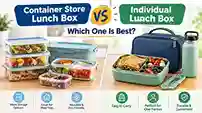
The right lunch box can simplify your daily eating routine, keep things tidy and make it easier. When you’re thinking about a container store lunch box vs individual lunch box, take into account how much storage you will need, how portable you want it to be, how long it will last and what kind of lunches you typically bring. Both of these can be used for the storage of homemade food and cut down on disposable packaging. But, this will rely on you and your lifestyle.
What is an Individual Lunch Box?
An individual lunch box is a container that is used to transport a meal for one person only. It can be made of one piece or multiple partitions or insulated on the outside. There are several types of lunch bags that can be used, such as plastic lunch boxes, stainless steel containers, bento boxes, and insulated lunch bags.
Students, office personnel, commuters and travelers all like individual lunch boxes. They are compact enough to fit in everyday life, and some even have enough space for a main meal and some snacks. Other optional elements might include lockable lids, detachable partitions, handles and washable utensils, depending on the item.
Container Store Lunch Box vs Individual Lunch Box: Main Differences
| Feature | Container Store Lunch Box | Individual Lunch Box |
|---|---|---|
| Primary purpose | Organized food storage and meal preparation | Carrying one person’s meal |
| Capacity | Depends on the container or storage set | Usually designed for a personal serving |
| Organization | May include stackable or multiple containers | May include compartments or dividers |
| Portability | Depends on the size and design | Usually designed for everyday transport |
| Meal preparation | Useful for preparing meals in advance | Useful for packing a daily lunch |
| Insulation | Depends on the specific product | Available in insulated and non-insulated designs |
| Cleaning | Depends on materials and construction | Depends on materials and construction |
| Price | Varies by brand and package size | Available at different price points |
The main distinction is the intended use. A storage-oriented container may offer more flexibility for organizing food, while an individual lunch box focuses on conveniently carrying a personal meal.
Container Store Lunch Box
If you like having a tidy kitchen and using a lunch bag that is versatile, a container store lunch box may be a good choice. Depending on the model, it is possible to stack multiple food containers, separate the ingredients, and create food for an upcoming busy week. All of these features may make it easier to prepare lunches for work, school or family outings.
The other benefit is that there are different kinds of food storage alternatives offered by specialist merchants. Some highlight the stacking feature, others promote the amount of portions or the ease of refrigeration. When buying, be sure to verify capacity, lid design, material, and purpose. If you intend to transport liquids or hot food, ensure that the specific product has been made for that purpose.
Value
For those who eat at regular intervals or prepare meals ahead of time, a container store lunch box can be a great deal of value. Reusable containers can be used to minimize disposable packaging and make leftovers easier to store. The total value is determined by durability, number of containers and frequency of use.
Key Features
Daily meal planning and preparation of food.
Potentially stackable designs for convenient storage.
At the table, there are different sizes of snacks, sides and main dish.
The reuse of materials, as per the product.
Options for refrigerator storage and meal preparation.
Pros
Helps keep prepared food organized.
Can help to make the weekly meal prep more manageable.
Different foods can be stored in multiple containers.
Disposable packaging can be minimised by using reusable designs.
Various sizes can offer flexible storage options.
Cons
There are many differences between features of products.
Some models call for an extra insulated bag.
Several containers may be stacked in the cupboard.
Not all designs can be used for liquids.
Additional pieces may be required and could cost more.
Recommended
Ideal for individuals who do cook a few meals in advance, plan for leftovers, or have the flexibility to store food in various ways. It might be particularly helpful for the busy household and for those who like to prepare meals.
Best For
Individuals making their own meals every week.
Families organizing food portions.
People who eat their lunches at home while working.
People that prefer to use containers that can be reused.
For those who cherish organized storage solutions in their kitchens.

Individual Lunch Box
An individual lunch box is designed for people who want a convenient way to carry their own meals. Its personal size makes it suitable for school, work, commuting, and short trips. Depending on the model, it may feature one large compartment or several smaller sections for keeping sandwiches, fruit, vegetables, and snacks separate.
The best individual lunch box depends on your eating habits and transportation needs. A compact container may be suitable for light lunches, while a larger model can accommodate a more substantial meal. If you frequently pack soups, sauces, or other liquids, choose a product specifically designed to prevent leaks. You should also check the cleaning instructions and confirm whether the container is safe for microwave or dishwasher use.
Value
An individual lunch box offers value by providing a dedicated container for everyday meals. A durable design can be used repeatedly and may help reduce spending on disposable packaging. Look for a model that balances price, capacity, portability, and material quality.
Key Features
- Personal size for carrying one meal.
- Available in plastic, stainless steel, and other materials.
- Optional dividers for separating foods.
- Some models include utensils or carrying handles.
- Insulated options for additional temperature protection.
Pros
- Convenient for everyday transportation.
- Designed around individual meal requirements.
- Available in many sizes and styles.
- Compartments can keep foods separate.
- Reusable options can reduce disposable waste.
Cons
- Smaller models may not accommodate large meals.
- Some designs provide limited storage flexibility.
- Insulated versions may cost more.
- Poorly sealed lids may leak.
- Compartments may require extra attention during cleaning.
Recommended
An individual lunch box is recommended for students, employees, commuters, and anyone who regularly carries a personal meal. It is particularly useful when portability and simple everyday use are the main priorities.
Best For
- Students taking lunch to school.
- Office workers carrying homemade meals.
- People who commute or travel regularly.
- Individuals who prefer portion-controlled meals.
- Anyone seeking a convenient daily food container.

Which Lunch Box Is Better for Everyday Use?
The better option depends on how you store and transport your food. A container store lunch box may be more useful when you prepare several meals at once or need different containers for ingredients, snacks, and leftovers. An individual lunch box is often more convenient when you want to pack one meal and take it to school, work, or another destination.
For example, someone preparing lunches for an entire week may benefit from stackable containers that fit neatly in the refrigerator. A student who carries a sandwich, fruit, and a snack may prefer one compact lunch box with separate compartments.
Consider your typical meal size, available storage space, and daily travel routine before making a decision. These practical factors can be more important than appearance or brand name.
Which Option Is Better for School and Office?
For school, an individual lunch box is often a convenient choice because it can fit inside a backpack and hold a student’s usual meal. Compartments can help separate snacks from the main dish, while a secure lid can reduce the chance of spills.
For office use, either option can work well. A personal lunch box is suitable for carrying one meal, while a collection of food containers may be more useful for people who prepare several lunches ahead of time. If your workplace has a refrigerator or microwave, check that the selected container is appropriate for your storage and reheating routine.
Material and Durability Comparison Container Store Lunch Box vs Individual Lunch Box
Material quality is an important consideration when choosing a lunch container. Plastic containers are usually lightweight, making them easy to carry. However, their durability depends on the type of plastic, construction quality, and care instructions.
Stainless steel containers can be durable and suitable for carrying many types of food, but they generally cannot be used in a microwave. Glass containers may be convenient for refrigerator storage and reheating when specifically labeled microwave-safe, although they are heavier and can break if dropped.
If temperature control matters, consider an insulated lunch bag or a food container designed for that purpose. Remember that insulation does not automatically guarantee food safety. Always check the manufacturer’s instructions before using a container for hot food, cold food, or reheating.
Cleaning and Food Safety
A lunch box should be easy to clean after each use. Food particles can collect around corners, lid seals, and removable dividers, so these areas should receive particular attention. Allow the container to dry thoroughly before storing it to help prevent unwanted odors.
For perishable foods, use appropriate temperature-control methods. Cold meals may require an insulated carrier and ice packs, while hot meals should be stored in a suitable insulated food container. Follow established food-safety guidance rather than assuming that an ordinary lunch box will maintain a safe temperature.
Never assume that every container is leakproof, microwave-safe, or dishwasher-safe. Check the manufacturer’s instructions and use the product only for its intended purpose.
Price and Overall Value
Price is another factor in the container store lunch box vs individual lunch box comparison. A basic personal lunch box may be an affordable choice for everyday use, while a larger storage set may cost more because it includes several containers or additional accessories.
However, the lowest price does not always represent the best value. Compare capacity, material quality, lid security, cleaning requirements, and expected durability. Also consider whether you need to purchase accessories separately.
If you regularly prepare multiple meals, a set of reusable containers may be a sensible investment. If you only need to carry one lunch each day, a single well-designed individual lunch box may meet your needs without unnecessary expense.
Buying Guide: How to Choose the Right Lunch Box
Before purchasing, consider these important factors:
- Capacity: Choose a size that fits your usual meal.
- Portability: Check dimensions and weight to ensure the product fits your bag.
- Leak resistance: Select a container designed for liquids if you pack sauces or soup.
- Compartments: Dividers can keep different foods separate.
- Material: Compare plastic, stainless steel, glass, and insulated options.
- Temperature control: Determine whether you need insulation or separate ice packs.
- Cleaning: Look for accessible corners and removable parts.
- Price: Compare features and durability rather than focusing only on the initial cost.
- Reviews: Read feedback about the specific product’s usability, lid quality, and cleaning requirements.
These checks can help you choose a lunch container that fits your routine and offers practical long-term value.
Conclusion
The container store lunch box vs individual lunch box comparison shows that both options can be useful, but they serve somewhat different purposes. A container-based storage solution is a good option for organized food storage, preparing several meals, and keeping ingredients separated. An individual lunch box is generally more suitable for carrying one person’s lunch to school, work, or other destinations.
If you prepare meals in advance, consider storage flexibility, stackability, and capacity. If you need a container for daily travel, focus on portability, a secure lid, and suitable compartments. In both cases, check the material, cleaning instructions, and temperature limitations before buying.
Ultimately, the best choice is the one that matches your eating habits, available budget, and daily routine. Compare the actual product specifications carefully to find a reusable lunch solution that makes preparing and carrying meals easier.
Frequently Asked Questions (FAQs)
1. What is the difference between a container store lunch box and an individual lunch box?
A container store lunch box generally refers to a food-storage solution associated with a container retailer, while an individual lunch box is designed to carry one person’s meal. Their actual features depend on the specific products.
2. Is an individual lunch box better for school?
An individual lunch box is often convenient for school because it is designed for personal meals and can fit inside a backpack. A compartmentalized design can help separate sandwiches, fruit, and snacks.
3. Can a container store lunch box be used for meal preparation?
Yes, provided the particular containers are intended for food storage and meal preparation. Check the capacity, lid design, refrigerator suitability, and cleaning instructions before use.
4. Which lunch box is better for office workers?
Both can be suitable. An individual lunch box works well for carrying one meal, while reusable food-storage containers may be more useful for employees who prepare several meals in advance.
5. Are all lunch boxes leakproof?
No. Leak resistance depends on the lid, seal, and construction. If you carry liquids, choose a product explicitly designed for leak prevention and follow the manufacturer’s instructions.
6. Which lunch box material is best?
The best material depends on your needs. Plastic is often lightweight, stainless steel can be durable, and glass may be suitable for microwave use when specifically labeled safe. Consider portability, cleaning, and intended use.
7. How can I keep food fresh in a lunch box?
Use clean containers and appropriate temperature-control methods. Keep cold foods cold with suitable insulated storage and ice packs, and follow food-safety recommendations for perishable meals.
8. Is an expensive lunch box worth buying?
It can be worthwhile if the product offers useful features, durable materials, a secure lid, or suitable insulation. However, an affordable lunch box is also a good choice when it meets your everyday requirements.