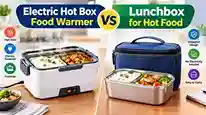
Electric Hot Box Food Warmer vs Lunchbox for Hot Food When you are not close to a microwave or any kitchen, it is quite tricky when it comes to keeping your meals warm away from home. An electric hot box food warmer and another, a lunchbox that keeps meals warm It can make your daily meals more convenient but both serves different purposes and serve different lifestyles.
Electric Hot Box Food Warmers vs Lunchbox for Hot Food — What Are The Key Differences? Heating ability, portability, capacity, power requirements and convenience. Knowledge of these differences can aid in your decision as to what is best for work, school, vacationing, road trippin and meal prep at home.
Electric Hot Box Food Warmer
These electric hot box food warmers are for someone who needs more than just simple food storage. Unlike an insulated container, an electric warmer utilizes a heating mechanism to heat or keep a meal warm. This makes them especially practical when food must let out heat for hours.
Electric food warmers can provide a convenient microwave alternative for those who spend most of their days away from home, such as office workers, drivers or travelers. Depending on the model, it is useable with wall outlets, vehicle power sources, or other compatible sources of power.
Value
The most important key to know about an electric hot box food warmer is its ability to keep things warm. A regular container would help keep food warm, while an electric warmer is a device to introduce heat into the meal when plugged into the correct mains المسار
This is helpful for rice, pasta, vegetables, noodles, soup or any type of prepared food. When users wanted to eat but had a cold meal or needed to find a microwave, they could be able to heat their food within a special warmer.
Key Features
Electric heating function
Portable design
Food container for everyday meals
Well for office and travel
Easy meal preparation
Convenient temperature maintenance
Useful for workers and drivers
Just plug into compatible models
Pros
Can actively warm food
Handy when we don’t have a Microwave
Useful for offices and workplaces
Ideal for travel and on-the-road use
Can leverage meal preparation into more flexible options
Enables users to enjoy warm meals away from home
Cons
Requires a suitable power source
Usually costs more than a standard lunch box
Heating takes time
Not all models are right for every type of food
Electrical components require proper care
Recommended
If you are one of the people that need heated food on the go regularly, we suggest getting an electric hot box food warmer. This is especially useful for people who are working in an office, truck drivers, travelers and other groups that get access to compatible power outlet during mealtime.
Best For
Ideal for: Office workers, drivers, travelers, commuters and people who want “active” food heating.

Lunchbox for Hot Food
A hot food lunchbox is yet a simpler product. It is not needed to heat the, generally, as even though it gets dish / container and seals it well enough to retain its own temperature. Insulation can limit heat transference and therefore retains the temperature of a meal longer than an average container.
If you are someone finally having dinner prepared right before leaving home then a well insulated lunchbox should work just perfect for you. It is also normally battery-free hence easily transportable all the way to school, work, outdoor areas or any place else where electricity isn’t available.
Value
Simplicity is the major benefit of a lunchbox for heated food. You can then cook your food at home, put it into the container, shut the lid and take it with you.
Traditional hot-foot lunch boxes can be applied most anywhere since they are independent of electricity. This makes it more attractive to students, commuters, outdoor workers and travelers who need a no-fuss meal-storage option.
Key Features
Insulated food storage
No electrical connection required
Portable construction
Easy to carry
Suitable for packed meals
Available in different sizes
Simple cleaning and maintenance
Useful for everyday lunches
Pros
Does not require electricity
Easy to carry
Simple to use
Often more affordable
Suitable for locations without power
Good for preheated meals
STM Dux Plus | $209inches useful for both the school, work and in travel.
Cons
Does not actively abate cold food
Temperature gradually decreases
Performance depends on insulation quality
Automatic warming equipment may not be as convenient as an electric warmer
When it comes to food preparation, timing can mean all the difference.
Recommended
A lunchbox for hot food is ideal if you need an uncomplicated portable meal prepared at home. Especially nice when there is no electricity or if you just need to keep warm food freshly prepared at temperature.
Best For
Who is it best for: Students, office workers, commuters, picnicers, travellers and anyone looking for a cost effective non-electric lunch solution.

Electric Hot Box Food Warmer vs Lunchbox for Hot Food: Main Differences
Both offer advantages and the value of either comes down to how you intend to work your meals in today. Both are optimized for storing food in convenience but their role is not the same.
A hot box food warmer is a type of food warmer that can be heated by electricity. It is mainly insulation and hot food — A lunch box for hot food.
Heating Performance
The heating capacity performance is the biggest disparity.
An electric warmer is good to heat. If your meal has cooled down, connecting to the suitable power source can warm it up there also. This is benefiting for folks who do not have access to immediate consumption after preparing their food.
A traditional lunchbox does not typically heat up. Instead, it tries to maintain the temperature of the food already used before being inside. So good insulation can slow down heat loss, but it can’t add heat forever.
So, if heat is a priority for you, we can declare the electric option the winner.
Portability
Both can be portable, yet portability means something relatively different with both products.
Since a standard lunchbox doesn’t require electrical add-ons, it’s ordinarily much more convenient to carry. You can throw it in a backpack, work bag or large lunch pack and not worry about finding an outlet.
An electric hot box can be extremely portable as well, but you have to balance its power cable and where you will use it with portability. Others are made for your vehicle or workplace, which can make these very useful for some users.
Power Requirements
Power is another major consideration.
The heating feature of the electric hot box can only be used when a power source is compatible. This will either be a household outlet or some other connection, depending on how the product was designed.
This kind of lunchbox is not required for a non-electric one. Upon packing the meal, you can utilize the container while on the go.
If you work somewhere that uses little to no electricity often though, the classic lunchbox is probably better in terms of convenience.
Convenience Electric Hot Box Food Warmer vs Lunchbox for Hot Food
Convenience depends on your routine.
If you simply get to work with a cold meal and need it heated before eating, an electric food warmer can be very useful. It lessens reliance on a communal microwave.
Another way that a classic lunchbox proveresourceful is the convenience. No cable, setup or waiting for electrical heating. All you do is pack your food and go in.
For one person who eats lunch right before they leave home, this simplicity might be everything you need.
Capacity
Because capacity can differ greatly between individual models, consumers should not assume that one type is always going to have more space than another; rather they will need to double-check with the actual measurements and volume.
Some electric warmers feature removable containers that allow for comfortable food preparation and cleaning. They come in traditional lunchbox styles, scaled down to single-meal containers or up to larger capacity for larger servings.
Consider your average portion size before selecting any product. A small container is perfect for a light lunch, while a bigger one can be more appropriate for a proper meal.
Cleaning and Maintenance
Cleaning is important because it is used for a long time everyday.
Although a detachable food container helps you get an electric warmer clean with greater ease, the user needs to follow the instructions of the manufacturer as far as which parts can be washed, etc. It is imperative that electrical devices are insulated from water.
A traditional lunchbox is relatively simpler as it has lesser parts. Depending on the materials, care and manufacturer, many models can be cleaned after every meal using regular dishwashing techniques.
Cost Consideration
Pricing ranges by make, build, size and capacity.
An electric hot box food warmer typically costs more as it contains heat elements and electrical hardware. That said, spending a few extra bucks could be worth it for someone who consistently requires warm food at the office or on the go.
Oftentimes a simple insulated lunch box is an easier buy. If you already have warm food at home and just need a box to carry the food at higher temperature, electric heating is not worth extra money.
Which One Should You Choose?
Choosing between an electric hot box food warmer vs lunchbox for hot food ultimately comes down to your daily routine.
Choose an electric hot box food warmer if you:
- Need to warm food during the day
- Work away from home for long hours
- Have access to a compatible power source
- Often eat meals after they have cooled
- Want an alternative to a shared microwave
- Spend significant time driving or traveling
Choose a lunchbox for hot food if you:
- Prefer a simple container
- Do not have access to electricity
- Usually eat soon after preparing your meal
- Want something easy to carry
- Prefer a non-electric option
- Want straightforward meal storage
Neither product is automatically better for everyone. The best choice depends on your schedule, location, meal habits, and whether active heating is important to you.
Electric Hot Box Food Warmer vs Lunchbox for Hot Food for Work
For office workers, the electric hot box can be especially useful when a workplace has limited microwave access. You can bring a prepared meal and use the warmer according to its instructions.
However, a traditional lunchbox can be more convenient when the office already has a microwave or when you normally eat your meal soon after arriving.
Consider your workplace environment before buying. If outlets are limited, a non-electric lunchbox may be easier. If microwave access is inconvenient, an electric warmer can offer more independence.
Electric Hot Box Food Warmer vs Lunchbox for Hot Food for Travel
Travelers should consider both portability and power availability.
A traditional lunchbox is useful for outdoor trips, picnics, and locations without electrical access. It can store a prepared meal without requiring additional equipment.
An electric warmer can be particularly useful for road travel when an appropriate vehicle or electrical connection is available. For long-distance journeys, the ability to warm food can be a significant convenience.
Electric Hot Box Food Warmer vs Lunchbox for Hot Food for Drivers
Drivers often spend many hours away from home, making meal planning important. An electric food warmer can be appealing because it can provide a way to warm a prepared meal during a break when compatible power is available.
A traditional lunchbox remains a practical alternative for drivers who prefer meals that are already warm when packed or who do not want to depend on electricity.
For professional drivers, portability, durability, capacity, and power compatibility should all be checked before making a purchase.
Important Buying Factors
Before choosing either product, consider these factors:
Capacity: Make sure the container can hold your normal meal portion.
Material: Look for food-contact materials appropriate for your intended meals.
Portability: Check dimensions, weight, handles, and how easily the container fits into your bag or vehicle.
Heating: If choosing an electric model, check its heating method and power requirements.
Cleaning: Removable containers and simple designs can make daily cleaning easier.
Leak resistance: If you carry sauces, soups, or other liquids, pay attention to the lid and sealing system.
Durability: A lunch container used every day should be able to withstand regular carrying and cleaning.
Safety: Always follow the manufacturer’s instructions for electrical connections, heating times, food handling, and cleaning.
Final Verdict
The electric hot box food warmer vs lunchbox for hot food comparison does not have one universal winner. Each option solves a slightly different problem.
An electric hot box food warmer is the better choice when active heating is important. It can be particularly useful for people who spend long hours at work, drive for a living, or regularly need warm meals without a microwave.
A lunchbox for hot food is the better choice when simplicity, portability, and independence from electricity matter most. It is easy to pack, carry, and use in locations where power is unavailable.
Before purchasing, think about when you prepare your meals, where you eat, how long the food needs to remain warm, and whether you will have access to electricity. These simple questions can make the decision much easier.
Conclusion
When comparing an electric hot box food warmer vs lunchbox for hot food, the right choice depends on your lifestyle rather than simply choosing the product with more features. Electric models provide the benefit of active warming, while traditional lunchboxes focus on insulation and convenient food storage.
If you frequently need to heat meals during work or travel and have access to a compatible power source, an electric warmer can be a valuable addition to your daily routine. If you want a lightweight and straightforward solution that works without electricity, a quality lunchbox for hot food may be the better option.
Ultimately, consider your meal habits, portability needs, budget, capacity requirements, and access to power before buying. Choosing according to your actual routine will help you get more value from your lunch solution.
Questions and Answer
1. What is the difference between an electric hot box food warmer and a lunchbox for hot food?
An electric hot box food warmer uses electricity to heat or maintain the warmth of food, while a traditional lunchbox for hot food generally relies on insulation to retain the temperature of food that was already heated.
2. Is an electric hot box food warmer better than a lunchbox?
It depends on your needs. An electric warmer is better if you need active heating, while a traditional lunchbox can be better if you want portability, simplicity, and no dependence on electricity.
3. Can an electric food warmer heat cold food?
Many electric food warmers are designed to warm prepared food, but heating performance and recommended food types vary by model. Always follow the specific manufacturer’s instructions.
4. Does a lunchbox keep food hot all day?
An insulated lunchbox can help retain heat, but no ordinary lunchbox can guarantee that food will remain hot all day. Heat gradually decreases depending on insulation, starting temperature, outside temperature, opening frequency, and other factors.
5. Can I use an electric food warmer at work?
Yes, if the product is designed for your workplace power supply and your workplace permits its use. Always check the manufacturer’s power requirements and workplace rules before connecting an electrical warmer.
6. Which is better for truck drivers?
An electric food warmer can be useful for truck drivers when a compatible power connection is available. A traditional insulated lunchbox may be preferable when electricity is unavailable or when simplicity is the priority.
7. Is a lunchbox for hot food good for travel?
Yes. A suitable insulated lunchbox can be convenient for travel because it does not require electricity and can be carried with other travel supplies.
8. What should I look for in an electric hot box food warmer?
Look at capacity, heating performance, power requirements, portability, container material, cleaning convenience, lid design, durability, and compatibility with your intended power source.
9. What should I look for in a lunchbox for hot food?
Consider insulation, capacity, leak resistance, materials, dimensions, weight, lid security, ease of cleaning, and whether the design suits your daily routine.
10. Which option is more convenient for everyday meals?
For users who need active heating, an electric food warmer can be more convenient. For users who simply need to carry a prepared meal and retain its warmth, a traditional lunchbox can be more convenient.