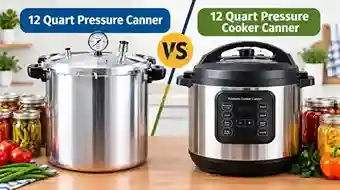
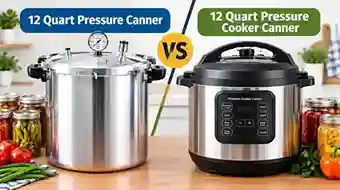

12 Quart Pressure Canner vs 12 Quart Pressure Cooker Canner There are many questions to consider when choosing equipment for home food preservation, such as 12 quart pressure canner vs 12 quart pressure cooker canner. Both appliances employ pressure and heat, both may sport similar looks design-wise, but they’re not necessarily built for the same tasks.
A pressure canner is used for pressure canning foods that require a high temperature setting. A pressure cooker is either designed almost exclusively for fast cooking, whereas newer electric ones can also be targeted as a pressure cooker and can have any number of extra options.
Knowing how each differs may help you select one that meets your cooking and food-preserving goals.
What Is a 12 Quart Pressure Canner?
12 QUART PRESSURE CANNER A 12 quart pressure canner is a larger pressure vessel specifically designed to preserve food in sealed jars. It thermally conditioning the water above what would be its normal boiling point by the application of pressure.
Such high temperature is essential for the processing of low-acid foods that are heat sensitive, including vegetables, meats, poultry and seafood. These foods need to be processed by pressure canning, not simple boiling-water canning.
Most classical pressure cooker canners, usually become available in aluminum or stainless-steel materials. They often come with a pressure gauge, a pressure regulator, a locking lid, safety valves and even rack to hold jars.
12 quart is a measurement that primarily refers to the volume of liquid that the vessel can hold, but since it differs based on its design and manufacturer actual jar capacity may differ.
What Is a 12 Quart Pressure Cooker Canner?
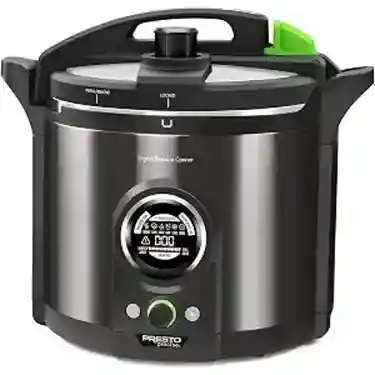
A 12 quart pressure cooker canner is a mixture of pressure-cooking features and food preservation functionalities. Hold tight- low and behold, it has multiple cooking programs, auto-temperature controls, digital display as well as timers and pressure settings depending on the model.
Unlike a double-tank stovetop canner, an electric pressure cooker canner has the capacity to be controlled electronically. Custom Users can choose a program that allows the appliance and/or oven to automatically adjust, based on certain cooking parameters.
Yet not every device that calls itself a pressure cooker or multicooker is safe for pressure canning. Canned foods should be prepared in accordance with directions provided with a product labeled for home canning or other equipment that has been determined to be suitable for the intended canning method.12 Quart Pressure Canner vs 12 Quart Pressure Cooker Canner
12 Quart Pressure Canner vs 12 Quart Pressure Cooker Canner
The principal difference among these devices lies in their utility and manner of operation.
A traditional 12 quart pressure canner is virtually only good for pressure canning. Depending on the design of a 12 quart pressure cooker canner, it is used for cooking and preservation.
Here are some of the key differences.
1. Primary Purpose
A pressure canner is designed primarily with the preservation of food in jars. Its structure is designed to keep the pressure and hot temp up during processing.
So a pressure cooker canner is usually a 2 or 3 jobs in one. It can function as a pressure cooker, for slow cooking, steaming, sautéing, warming and more in the kitchen.
A separate pressure canner may be a more simple option if you only plan to use it for traditional home canning.
2. Heat Source
Conventional pressure canners are generally used on a stove top. The cook switches on the burner and follows operating guidance as per pressure regulator manufacturer.
Electric pressure cooker canners work by generating heat internally. Their electronic controls can automatically adjust the appliance according to a selected program.
This can especially come in handy for electric models for those who also enjoy automatic controls.
3. Pressure Monitoring
A dial gauge, a weighted gauge or a weighted pressure control used are standard on traditional canners. The user can also keep track of the pressure during processing.
Electric models tend to utilise electronic sensors and programmed controls.
You can find either type and you should always follow the manufacturer’s guidelines for how to carry on using them. Safe processing relies on the exact protocol for time, pressure, and altitude adjustment so it should NOT be guessed at or fiddled with.
4. Ease of Operation
With a traditional pressure canner, however, you need to be much more hands-on. Usually you heat the canner, monitor pressure and adjusted burner as needed and follow the processing instructions meticulously.
An automatic electric pressure cooker canner does many of these processes for you.
An electronic interface Instantly seems to be easier for a beginner, but convenience can never substitute the necessity of following safe canning practices.
5. Cooking Versatility
This is an application where pressure cooker canners tend to compete favorably amongst general use devices in the kitchen.
A standard pressure canner is a preservation device. It is sometimes used for cooking but the large size and design means that it can be less practical for everyday meals.
Electric pressure cooker: Depending on the model, they can be prepared with an electric pressure cooker other recipes such as soups, stews, beans, rice, meat dishes and steamed foods.

12 Quart Pressure Canner vs Pressure Cooker Canner: Capacity
Capacity is another important consideration.
We have a 12 quart appliance which gives us plenty of room for batching several jars at once; the quantity of jars you can fit depends on their size and the internal shape of your particular appliance.
Pint jars and quart jars, for example, take up different amounts of space. Others include racks that enable more jars to be arranged in different ways.
Remember to always check the jar capacity of each model right before you buy instead of simply assuming all 12 quart models will hold the same number of jars.
For canners marketed for large batch food preservation, the actual volume of the pressure cooker might be more relevant than solely considering the quart number.
Which Foods Can Be Pressure Canned?
Pressure canning is a great method of preserving low-acid foods that cannot be safely canned using the standard boiling-water bath method.
Examples include:
Green beans
Carrots
Corn
Peas
Meat
Poultry
Fish
Some soups and combination foods
Each food and each recipe warrants a different processing method.
Food-preservation authorities recommend using current, tested recipes and processing instructions for safe preservation. WASHINGTON — The House Oversight and Reform Committee on Monday announced a series of hearings on the causes of the national supply chain crisis, including the role of overzealous processing times and pressure setting.
Can You Use a Pressure Cooker for Canning?
This is one of the most important questions when comparing a 12 quart pressure canner vs 12 quart pressure cooker canner.
Surprisingly, the answer to that will depend on exact appliance.
Always remember that a standard pressure cooker is not automatically a pressure canner. Different requirements for pressure cooking and pressure canning especially when processing low-acid foods.
If the manufacturer states only its appliance is endorsed for pressure canning, use the directions of that model and any tested process appropriate. All pressure canning equipment should be specifically for that purpose; it is safer to use what the manufacturer recommends rather than guessing.
Traditional Pressure Canner Advantages
A traditional 12 quart pressure canner has several useful characteristics.
Dedicated Design
Its primary purpose is pressure canning, so the controls and components are designed around food preservation.
Simple Construction
Many traditional models have relatively straightforward mechanical designs without complicated electronic menus.
Stovetop Compatibility
Depending on the model, a traditional canner can work on compatible stovetops without requiring an electrical outlet.
Long-Term Use
A well-maintained traditional pressure canner can remain useful for many years. Replacement components such as seals or gauges may be available depending on the manufacturer.
Pressure Cooker Canner Advantages
A multifunctional pressure cooker canner can also offer several benefits.
Multiple Cooking Functions
One appliance may provide pressure cooking, steaming, slow cooking, warming, and other functions.
Digital Controls
Digital controls can make everyday cooking convenient by allowing users to select preset programs.
Less Manual Monitoring
Some models automatically manage parts of the heating and pressure-control process.
Everyday Kitchen Use
If you want an appliance that can be used frequently for meals rather than only for seasonal food preservation, a multifunctional cooker may be attractive.
Important Safety Considerations
Pressure canning involves high temperatures and pressure, so safety should always be a priority.
Before using a pressure canner:
- Read the manufacturer’s complete instructions.
- Inspect the lid, gasket, valves, and pressure-control components.
- Make sure the pressure-release system is clean and functioning properly.
- Use jars and lids appropriate for canning.
- Follow tested recipes and processing instructions.
- Account for altitude when the instructions require an adjustment.
- Never force a pressure canner open.
- Allow pressure to return to the appropriate level before opening.
- Never use an appliance for pressure canning if the manufacturer does not recommend it for that purpose.
It is especially important not to confuse pressure cooking instructions with pressure-canning instructions.
Cleaning and Maintenance
Proper maintenance can extend the useful life of either appliance.
After each use, clean the interior according to the manufacturer’s recommendations. Pay particular attention to the lid, gasket, pressure valve, vent, and sealing surfaces.
Traditional pressure canners may require occasional inspection of their gauge or pressure-control components.
Electric pressure cooker canners have additional electronic components, so the base should be handled according to the manufacturer’s cleaning instructions. Electrical components should not be immersed in water unless specifically designed for that purpose.
Which One Is Better for Beginners?
The answer depends on what the beginner wants to accomplish.
If the primary goal is learning traditional pressure canning, a dedicated pressure canner can provide a straightforward way to learn the process.
If the goal is everyday cooking with additional functions, a multifunctional pressure cooker may provide more versatility.
However, beginners should not choose equipment based only on the number “12 quart.” Look at the appliance’s intended use, manufacturer instructions, pressure-control system, jar capacity, stovetop compatibility, and safety features.
Which One Takes Up More Space?
Both 12 quart appliances can be relatively large.
Traditional pressure canners may have a tall cylindrical design with handles extending from the sides. Electric pressure cooker canners can have a wider base and electronic control panel.
Before purchasing, measure your countertop and storage space. Also consider the height of the appliance if you plan to use it beneath kitchen cabinets.
Cost Considerations 12 Quart Pressure Canner vs 12 Quart Pressure Cooker Canner
The price of a pressure canner or pressure cooker canner depends on materials, brand, controls, capacity, and included accessories.
A basic stovetop pressure canner may have fewer electronic components and functions.
A multifunctional electric model may cost more because it combines several cooking features into one appliance.
Instead of comparing price alone, consider how often you will use the appliance and whether you need its additional features.
Final Comparison
When comparing a 12 quart pressure canner vs 12 quart pressure cooker canner, the most important difference is not simply the capacity.
A traditional pressure canner is focused on pressure canning and usually provides mechanical pressure controls and stovetop operation. A pressure cooker canner may combine pressure cooking with other kitchen functions and may offer electronic controls.
For food preservation, always verify that the exact model is intended for the type of canning you want to perform. A product’s marketing name alone should not be treated as proof that it is suitable for pressure canning.
Ultimately, your choice should depend on your intended use, cooking style, available space, desired features, and the manufacturer’s approved instructions.
Conclusion
The 12 quart pressure canner vs 12 quart pressure cooker canner comparison comes down to purpose, operation, versatility, and safe food-preservation capability.
A dedicated pressure canner is designed around pressure canning, while a pressure cooker canner may provide a broader selection of cooking functions. Both can be useful kitchen appliances, but they should not automatically be considered interchangeable.
If home food preservation is your main objective, focus on equipment specifically designed and approved for pressure canning. If you want an appliance for everyday meals as well as other functions, investigate the exact capabilities of a multifunctional model.
Most importantly, always follow the manufacturer’s instructions and tested food-preservation guidance when pressure canning. Correct equipment, processing time, pressure, and altitude adjustments all matter when preserving food safely.
Frequently Asked Questions
1. What is the main difference between a 12 quart pressure canner and a pressure cooker canner?
A pressure canner is primarily designed for pressure canning, while a pressure cooker canner may combine pressure cooking with additional kitchen functions. The exact capabilities depend on the model.
2. Can a 12 quart pressure cooker be used for pressure canning?
Not necessarily. A pressure cooker should only be used for pressure canning when the manufacturer specifically states that the appliance is designed and approved for that purpose.
3. Is 12 quarts a good size for home canning?
A 12 quart capacity can be practical for many home users, but actual jar capacity varies by appliance design. Check the manufacturer’s specifications for the number and size of jars supported.
4. What foods can be pressure canned?
Pressure canning is commonly used for low-acid foods such as vegetables, meats, poultry, and seafood. Always use a tested recipe and appropriate processing instructions for the specific food.
5. Which is easier to use, a traditional pressure canner or an electric model?
Electric models may automate some controls, while traditional canners require more manual monitoring. However, both require users to understand and follow the appropriate safety and processing instructions.
6. Can pressure cooking and pressure canning instructions be used interchangeably?
No. Pressure cooking and pressure canning are different processes. Always use instructions specifically intended for the food-preservation method you are performing.