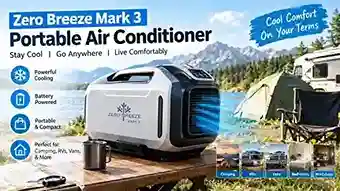
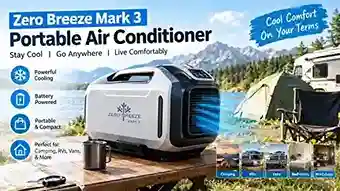

Zero Breeze Mark 3 Portable Air Conditioner Portability can be a game-changer when it comes to remaining hot inside non-traditional air conditioning shapes. The Zero Breeze Mark 3 portable air conditioner targets those who need the ability to beat the heat away from home. A portable unit can be set up in places where a window or central air-conditioning system isn t practical, including bedrooms, tents, RVs, cabins workshops and other spaces.
What Is the Zero Breeze Mark 3 Portable A/C?
The Zero Breeze Mark 3 is a portable air conditioner that can be useful in situations where standard ACs can’t go. It has a compact design that allows users to transfer the unit between many locations instead of keeping it permanently in one room.
A hydrogen membrane fuel cell vehicle is one of its biggest draws, allowing for the use of battery power. It may come in handy when you are camping, travelling with an RV, hanging out in a garage or staying somewhere without immediate access to an old-fashioned wall-powered air conditioning unit.
Best to consider something like a portable AC vs trying to cool big building — individual/focused space is what these would be for more practical household scenes. Its effectiveness relies on the size of a room, insulation, ventilation, ambient temperature and how the u nit is put in place.
Compact Design and Portability
One of the most important considerations in regards to a Zero Breeze air conditioner is its portability. An air conditioner with wheels can be cumbersome and challenging to move, while a portable cooling unit is designed for simpler mobility.
This comes in very handy for outdoor activities. A frequent camper might, for example, want to be cool inside a tent during hot weather. For example, an RV owner may want a cooling option for a sleeping area.
The small footprint also allows the unit to come in handy within temporary spaces. You do not always need to reserve a whole room for an air-con system.
But portability doesnt mean the system can be set literally anywhere and expected to operate as well as fully or near fully functional machinery. Scientific assumptions made about the proper putting and ventilation still prevails.
Technically, how does a portable air conditioner work?
How Portable Air Conditioners Work In their most basic form, a portable air conditioner takes heat from one location to another. The air is cooled through refrigeration components, which absorb heat from the air and disperse that heat somewhere else.
Managing exhaust is crucial, especially for a portable ac. The cooling performance can be adversely affected if warmth is back vented to a similar closed space.
Which is why it is so important for users to heed any manufacturer guidance about exhaust hoses, vents, and positioning.
The overall process is something like:
The cooling system draws in warm room air.
The refrigeration system extracts heat from the air.
It returns cooler air to the desired space.
Using the correct exhaust system, heat is routed away.
This procedure allows a movable device to be able to support unique cooling without the demand for long-term HEATING AND COOLING equipment.
Battery-Powered Cooling
Portable power is one of the more fascinating features that comes with the Zero Breeze product family. Being battery powered makes a portable air conditioner significantly more versatile than a standard home unit.
When there is no electricity or insufficient electricity, these battery-powered AC can come in handy. This could be especially handy for campers, travelers and those using vehicles far from conventional power sources.
But battery run time is dependent on a number of factors, such as: the operating mode and temperature range, but also capacity, ambient conditions and condition of the battery.
Users should segment their power needs before they leave the home, then prepare for long-term use. Having the right mode of charging or a second power source can be critical on longer rides.
Cooling for Camping
Camping can one of the situation where you will donot ask to get why we need a portable air conditioner.
In hot weather tent can be uncomfortable to sleep in due the way they trap heat. A portable AC could give you any tiny zone of cooling if setup properly.
For best results, it is generally recommended to cool just a small, enclosed setting rather than trying to cool down the entire outdoor space.
Before employing any of the electric equipment while camping, confirm the arrangement is right for that atmosphere. I also recommend protecting electrical connections from moisture and following all safety instructions provided by the manufacturer.
RV and Vans Zero Breeze Mark 3
There are some unique cooling challenges RV and van travelers face. Cars could turn extremely hot in the sun, and running a car’s main AC systems may not be very convenient.
An additional cooling device for a sleeping compartment or living zone can be an air conditioner portable.
The biggest advantage is flexibility. A portable system would allow the driver to potentially shift or store the device when not needed, instead of subjecting the vehicle to a permanent modification with a large air-conditioning installation.
But make sure you pay careful consideration to venting and power needs. Cars have less space inside, and that means they can get hot fast too. Use window coverings to improve overall cooling efficiency through insulation, maximise the ventilation of your home.
Energy and Power Considerations
It is essential to know how much power your portable air conditioner needs before purchasing it.
Operating on battery power may sound straightforward, but cooling is an accordingly energy-hungry process. Real-time will be based upon the machine and entered cooling specs.
If you intend to camp with the unit overnight, do the math on whether your battery capacity can see you through. If you are using in RV / van then also need to think about how it connects with your whole electrical system.
This is important when other equipment are running in parallel, which requires power planning. Total power consumption can all be powered by lights, refrigerators, fans, electronics and more.
Where Can You Use It?
The portability of this type of a/c introduces various possible applications.
Camping
A portable air conditioner can help keep camping tents comfortable with the added benefit of focused cooling when extreme heat arrives.
RV Travel
This may actually serve as an extra cooling system for RV and travel arrangements.
Van Life
This compact cooling may come in handy for those who spend long stretches of time inside converted vans.
Bedrooms
Portable AC can act as a cooling machine for a smaller sleeping room instead of the entire house.

Workshops and Garages
When a shop or garage does not have central air conditioning, a portable unit can sometimes be helpful during excessive heat.
Cabins
For when installing a traditional HVAC system is challenging, portable cooling can be beneficial at remote cabins.
Pros of Zero Breeze Mark 3
The Zero Breeze Mark 3 portable air conditioner is the kind of machine some people dream about.
Portable Design
One of the biggest advantages is that you can transfer an unit between different locations.
Flexible Power Options
Battery-powered operation, in a manner that leads to greater flexibility than systems with permanent electrical connection.
Useful for Travel
This idea is mainly aimed at tents, RVs, and vans or temporary places.
Targeted Cooling
You can use it to cool not an entire building, but a small individual space.
No Permanent Installation
This infers a versatile framework circumvents the establishment necessity that accompanies a customary climate control system.
Potential Limitations
The experts advise understanding the limitations of portable air conditioners.
Limited Cooling Area
One of the fundamental things to know about a compact portable AC is never think it will work for cooling an entire house. Room size and also enviromental conditions significantly affect performance.
Battery Runtime
Batteries allow for easy operation but they are limited to how long they will last. It becomes important to plan the power for long cooling sessions.
Exhaust Requirements
Extracting hot air is part of how a portable AC works. If the exhaust is not properly installed, effectiveness can be reduced.
Noise
Portable air-conditioning systems, as with other types of AC units, have mechanical components and fans that generate noise. If you intend to use the unit while sleeping, noise levels may be important.
Maintenance
Some manufacturers recommend regular cleaning of filters, ventilation components, drainage systems and others parts.
Here are ways to boost the performance of your portable air-conditioner
You can also optimize cooling performance by considering the very factors that surround the unit.
The first thing you want to do is minimize direct sunlight coming into the room. However, curtains, sheets or reflective coverings can be applied or appropriate insulation on a tent, RV, van; to avoid entering that heat in the room.
Second, minimize unnecessary air leakage. If cool air keeps getting out, it has to work a lot more.
Third, it is important to locate the unit according to the manufacturer’s way. Intake and exhaust have correctly routed airflow around them.
Fourth, Keep filters and other serviceable components clean also. Dust buildup can clog airflow and result in lower performance.
Lastly, use the proper cooling mode to the environment rather than demanding maximum cooling constantly.
Should you consider for normal home cooling?
This answer, of course, is relative to your expectations.
If you’re trying to cool an entire house or even a few big rooms, a traditional HVAC system or appropriately sized home air conditioner might work better for you.
For users who prioritize portability and focused cooling, however, the Zero Breeze Mark 3 is actually more intriguing than last year’s cooler. For example, a traveler used to camping or someone living the RV lifestyle may have different priorities than a consumer looking for a system to cool their whole home.
The trick is pairing the equipment to the space and the use-case.
Things to Consider Before Buying
Ask these questions before buying a portable air conditioner.
Where will you use it?
Decide where the main usage is going to take place: camping, RV, bedroom, workshop or elsewhere.
How large is the space?
It is highly influenced by the area where it has to be cooled.
How will you power it?
Decide whether you are going with a battery, mains, vehicle or other compatible source.
How long do you want it to work?
Extended operating periods need a little more thoughtful energy planning.
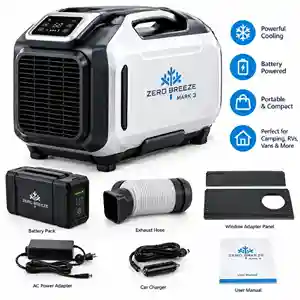
How will you handle exhaust? Zero Breeze Mark 3 Portable Air Conditioner
Ensure that the location you intend on is capable of removing heat effectively.
What maintenance is required?
Refer to the instructions like how to clean, drain, storag as well as maintain your equipment.
Portable AC vs Regular AC
Conventional home air conditioning system is typically designed to cool a certain building or room all the time. It may perform really well but it usually needs to be installed and something dedicated for power supply.
Meanwhile portability is about flexibility, an approach where portable system shines.
Generalised examples; A household AC may fit better for someone that needs a cooling effect on their permanent bedroom every day. A portable unit might be useful in a situation where the person requires cooling in multiple locations.
Neither method is fit for every scenario by default. Which one you should go for ultimately depends on your cooling needs, power access, form factor preferences, and budget.
Maintenance Tips
A portable air conditioner can work properly if you keep it well-maintained.
Clean it according to the schedule prescribed by the producer. Make sure to always keep air intake areas clear of dust and debris; Check for obstructions with exhaust components and also make sure that water drainage is taken care of correctly.
If the unit has a removable filter, clean or swap it as per the instructions.
If storing the unit for a long time, please refer to the storage procedure recommended by the manufacturer. The system is built to endure the winters, but adequate storage in between seasons or departures can help.
Final Thoughts
Zero Breeze Mark 3 Portable Air Conditioner — $1,040The Zero Breeze Mark 3 portable air conditioner is built around a simple but important concept: cooling doesn’t always need to be associated with a fixed location.
The portable idea also allows it to be utilized in camping, RVs, vans, cabins and anywhere that traditional a/c may not be practical. It can also run on battery power which provides extra versatility, and the compact design makes it easier to transport.
But buyers also need to have realistic expectations. Portable air conditioners are most effective when used in suitably sized spaces with adequate ventilation and electrical capability. These include battery runtime, exhaust management, noise and maintenance as well as environmental conditions.
If your perfect solution is localized and flexible cooling instead of whole-home air conditioning, you may look at a portable system like the Zero Breeze Mark 3. Assess its current specifications, power requirements, cooling capacity, accessories and operating instructions to the environment you intend it to work by closely comparing with manufacturer data before purchase.